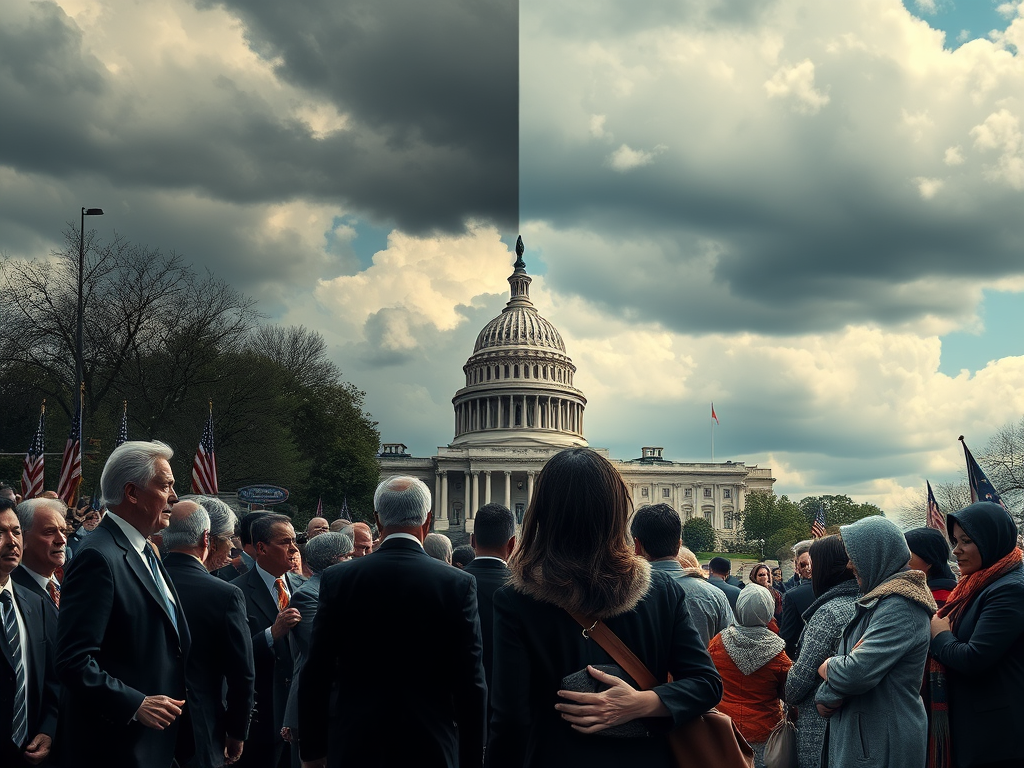
The Shutdown Isn’t a Failure, It’s a Strategy: 5 Truths Washington Is Hiding
Introduction: Beyond the Political Gridlock
The government shutdown has become a grimly familiar spectacle in American politics. It is tempting to dismiss the headlines of partisan warfare and legislative paralysis as just another episode of Washington’s chronic dysfunction. To do so, however, would be a grave mistake.
Behind the predictable political theater, an acute crisis is unfolding with imminent, tangible, and potentially irreversible consequences for millions of Americans. This is not merely a failure to compromise. It is an event driven by strategic calculation, designed to inflict maximum leverage by targeting the nation’s most vulnerable citizens and concealing a faltering economy. The shutdown has become a weapon, and its true costs are measured not in political points, but in human suffering and economic instability.
Here are five critical takeaways that reveal the shutdown’s true nature.
Takeaway 1: The Shutdown Is a Tool, Not Just a Failure
For some leaders, this shutdown is not a political failure but a strategic opportunity. Instead of viewing it as a breakdown in negotiations, they see it as a moment of leverage to enact changes that would otherwise be impossible. This perspective reframes the entire event from an accident of gridlock to a deliberate tactic.
Donald Trump articulated this view directly, stating that the shutdown provides a window to make irreversible changes:
we can do things during the shutdown that are irreversible that are bad for them and irreversible by them like cutting vast numbers of people out cutting things that they like cutting programs that they like
This sentiment was echoed by Speaker Johnson, who described the shutdown as a chance for Republicans to achieve policy goals that lack the necessary votes in the Senate:
eliminate bloated unnecessary federal programs that they’d like to vote down but don’t have the votes in the Senate… ultimately could be a benefit to the country for taxpayers if in this process we can get rid of some of the government fat.
This reframing is significant because the shutdown is not a consequence of failed talks but a calculated tool. This shift from procedural breakdown to policy weapon is profound. It signals a willingness to leverage a crisis mechanism for partisan goals that cannot be achieved through the normal legislative process, fundamentally altering the nature of governance itself.
Takeaway 2: The Most Immediate Threat Is to Mothers and Infants
While many government programs have contingency funds, the shutdown’s most immediate and severe impact is falling on the Women, Infants, and Children (WIC) nutrition program. The speed at which this crisis is unfolding is unprecedented.
According to the National WIC Association, the program is expected to “run out of funds in 1 to 2 weeks.” This rapid depletion is considered “unique” compared to past shutdowns, where similar programs often had a runway of several weeks or even a month. This means millions of mothers and young children are on the verge of losing critical nutritional support with almost no warning. This unprecedented speed is no accident; it is the direct result of a political strategy that leverages the suffering of the most vulnerable to achieve its aims.
The fallout creates a devastating domino effect. Nonprofits like Second Harvest Food Bank are already facing immense strain, being forced to dip into their reserves at a rate of $33,000 a week to meet rising demand. The impact is so stark because it targets the “most vulnerable individuals in our communities” with unparalleled speed, turning a political dispute into an immediate humanitarian crisis.
Takeaway 3: The Real Crisis Isn’t the Shutdown—It’s the Healthcare Bill Coming Due
The political conflict isn’t just about the temporary funding of government agencies. The true ticking time bomb at the center of this fight is the imminent expiration of the Affordable Care Act (ACA) tax credits. Democrats are holding firm because, without congressional action, tens of millions of Americans are about to receive notices that their health insurance costs are set to skyrocket.
The scale of this potential financial shock to household budgets is staggering. A nonpartisan report from the Kaiser Family Foundation projects that average premiums for those relying on ACA subsidies could rise by as much as $1,000 a month, effectively more than doubling for many families.
Senator Bernie Sanders characterized the situation in stark terms:
under the Republican proposal your premiums will on average double. This is insane. It is unacceptable.
This looming financial crisis connects the abstract political battle directly to the kitchen table finances of average Americans. It transforms the shutdown from a debate over government spending into a crisis over whether millions of families can continue to afford their health insurance.
Takeaway 4: The Shutdown Is Hiding a Stalling Economy
In a counter-intuitive twist, the shutdown is serving as a smokescreen for potentially negative economic news that might otherwise dominate the headlines. With government agencies closed, the public is being denied a clear picture of the nation’s economic health.
Specifically, the official September jobs report from the Bureau of Labor Statistics (BLS) is “expected to be delayed because of the government shutdown.” In its absence, the primary indicator available is the ADP report on private sector payrolls, and its findings are deeply concerning. The report revealed a “surprise” decline of 32,000 private sector jobs, starkly contrasting with forecasts of a 50,000-job gain. This marks the third month of job losses in the last four, according to ADP.
Job losses are concentrated in key sectors, including leisure and hospitality, construction, and manufacturing. This information vacuum does more than obscure bad news; it actively prevents the public, markets, and policymakers from making informed decisions, allowing a potentially serious economic downturn to go unaddressed under the cover of political chaos.
Takeaway 5: The Political Standoff Disproportionately Hurts “Red State” Residents
One of the most surprising political dynamics of the shutdown revolves around who stands to lose the most from the fight over ACA subsidies. While Republican leaders are fighting against extending the tax credits, the data reveals that the program has seen its most explosive growth in the states they represent.
According to figures presented by Senator Elizabeth Warren, the growth in ACA enrollment since 2020 has been most significant in Republican-led states:
- In Texas, enrollment has grown by 255%.
- In Mississippi, it has grown by 242%.
- In Louisiana and West Virginia, it has grown by 234%.
- In Georgia, it has grown by 227%.
This creates a profound political irony, as Republican leaders are locked in a battle that threatens to strip healthcare subsidies from a program that is overwhelmingly benefiting their own constituents. This raises a critical question: is this political strategy a profound miscalculation, or is the ideological goal of dismantling the ACA considered more important than the immediate financial well-being of the voters these leaders represent?
Conclusion: The Real Cost of Gridlock
The government shutdown is not a passive event born of intractable differences; it is an active strategy. It is a political tool wielded to achieve policy goals by other means, a smokescreen for a weakening economy, and a direct threat to the financial stability of millions of households. The headlines may focus on the blame game, but the true story is one of calculated leverage, where the well-being of mothers, infants, and working families becomes collateral damage in an ideological war.
With American families and the national economy caught in the crossfire, the ultimate question is not who will win the political battle, but whether the very function of government is being permanently broken as a strategic choice.