Let's be real: if you're still doing SEO like it's 2020, you're basically bringing a flip phone to a smartphone fight. The game has changed, and AI isn't just knocking at the door anymore; it's already moved in, ordered pizza, and is probably optimizing your competitor's content as we speak.
But here's the thing: most businesses are either completely ignoring AI in their SEO strategy or going full robot mode and wondering why their content feels as soulless as a Windows error message. The sweet spot? A strategic blend that makes your 4Us Digital approach both efficient and genuinely helpful.
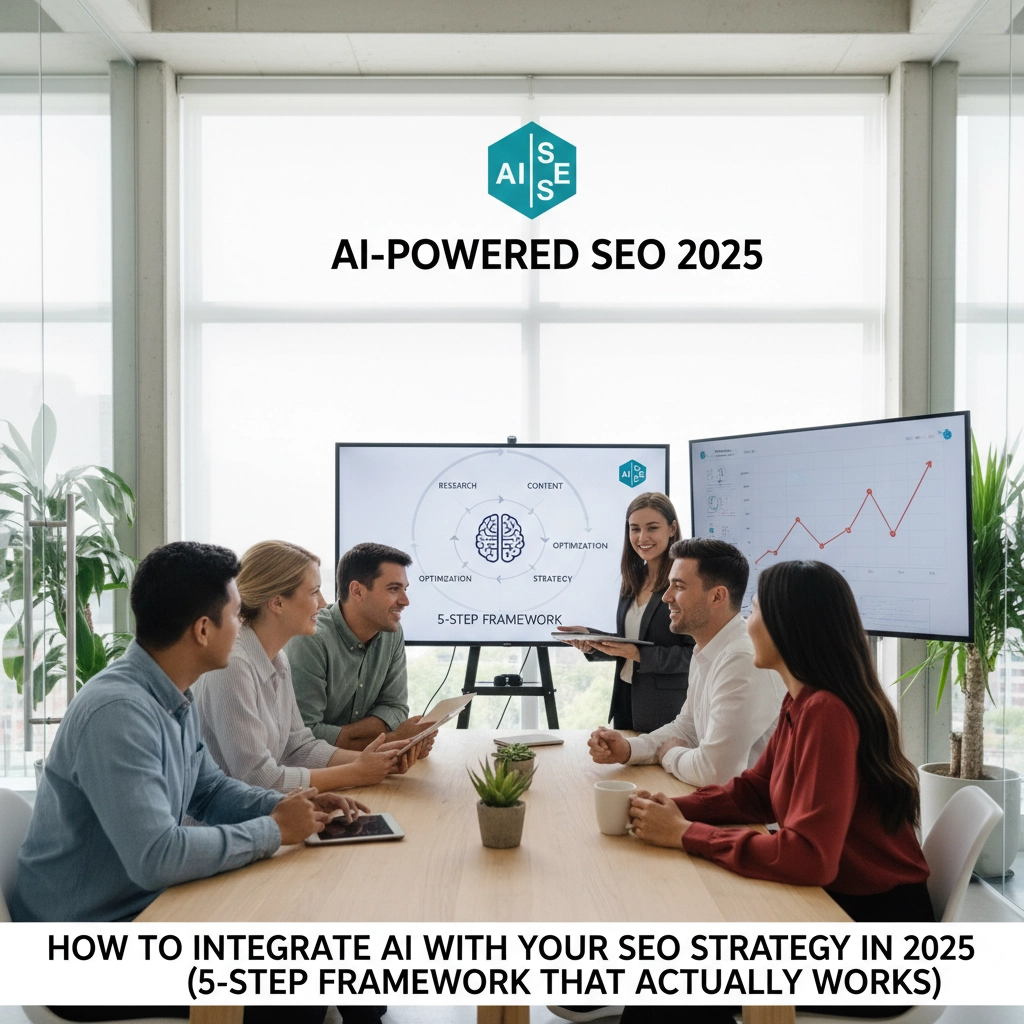
Step 1: Build Your AI SEO Foundation (Without Losing Your Mind)
Before you start throwing AI tools at your website like digital confetti, you need to establish what success actually looks like. Think of this as creating a baseline that'll make you look like a genius when you present your results six months from now.
Document everything: Your current organic traffic, keyword rankings, content creation speed, and yes, even how many hours you spend staring at Google Search Console wondering what went wrong. This data becomes your "before" picture in your SEO transformation story.
Choose your tools wisely: Here's where most people mess up: they collect AI tools like Pokemon cards. Pick one primary SEO platform for tracking, one AI writing assistant, and maybe one specialized tool for technical audits. More tools don't equal better results; they equal more confusion and higher subscription costs.
The 4Us Digital platform philosophy is simple: fewer tools, better execution. Train your team on what AI can actually do (hint: it's not magic) versus what still needs human brain power (which is more than you might think).

Step 2: Master AI-Powered Research and Intent Analysis
Remember when keyword research meant stuffing "best pizza delivery" into a tool and calling it a day? Those days are deader than dial-up internet. AI-powered research digs deeper into what people actually want to accomplish, not just what they type into search bars.
Think intent, not just keywords: AI tools can analyze search patterns to reveal that someone searching "pizza delivery" might actually want "quick family dinner solutions" or "late-night study fuel." This insight transforms your content from generic to genuinely useful.
Spy on your competition (legally): Use AI to analyze what your competitors are doing with their content creation. Are they suddenly publishing three times more often? Their writing style feel suspiciously similar across all posts? That's probably AI at work. Learn from their successes and avoid their robotic mistakes.
The beauty of modern SEO approaches is that you can identify content gaps your competitors haven't even noticed yet. While they're busy optimizing for "digital marketing services," you could be targeting "digital marketing for businesses that hate marketing jargon."
Step 3: Create Content That Doesn't Suck (With AI's Help)
Here's where the magic happens: and by magic, we mean the strategic combination of AI efficiency with human creativity. AI handles the heavy lifting (research, structure, first drafts) while humans add the personality, expertise, and "wait, that actually makes sense" factor.
Content creation workflow: Start with AI-generated content briefs that go beyond simple keyword lists. Think comprehensive roadmaps that include user intent, content angles, and success metrics. Tools like SurferSEO or Clearscope can provide real-time optimization suggestions as you write.
The E-E-A-T factor: Google's latest ranking factors focus on Experience, Expertise, Authoritativeness, and Trustworthiness. This means your AI-generated content foundation needs human expertise layered on top. Generic AI content gets buried faster than your New Year's resolutions.
Pro tip: AI-enhanced content strategies work best when you use AI for research and structure, then add your unique insights, experiences, and personality. Think of AI as your research assistant, not your replacement.

Step 4: Implement Predictive Analytics and Real-Time Optimization
This is where SEO gets exciting: using AI to predict what's coming next instead of just reacting to what happened yesterday. It's like having a crystal ball, except this one actually works and doesn't require mysterious crystal maintenance.
Predictive SEO systems: Set up AI-driven forecasting that identifies trending topics, seasonal shifts, and ranking opportunities before your competitors notice them. This means you're creating content for "summer vacation planning" in February, not May.
Automated performance tracking: Implement systems that monitor SERP movements, competitor activity, and technical SEO issues in real-time. When your rankings drop, you'll know immediately instead of discovering it during your monthly panic-inducing analytics review.
Technical optimization: Use AI to implement structured data and semantic HTML that helps search engines understand your content better. Schema markup for articles, FAQs, and how-to content can significantly improve your visibility in search results.
The 4Us Digital approach to predictive analytics means you're always one step ahead, creating content that answers questions people haven't even started asking yet.

Step 5: Personalize and Continuously Improve (The Never-Ending Story)
The final step isn't really final: it's the beginning of a continuous improvement cycle that makes your SEO strategy adapt and evolve like a digital chameleon.
Dynamic user experience: Implement AI-powered personalization that adapts your website experience to individual users. Someone searching for "small business marketing" from Denver sees different content than someone with the same search from New York. It's like having a personal concierge for every website visitor.
Continuous optimization: Set up systems that automatically identify content needing updates, keywords losing steam, and new targeting opportunities. Your AI-powered optimization should be working 24/7, not just during your monthly content review meetings.
Local and mobile focus: AI helps optimize for local search intent and mobile-first indexing, ensuring your content performs well across all devices and locations. Core Web Vitals and page experience signals are now primary ranking factors, not nice-to-haves.
As one SEO expert noted, "The key to success with AI SEO lies in quality over quantity: Google's recent updates prioritize content depth, user satisfaction, and expertise over traditional metrics like word count and keyword density."
The Reality Check: What Actually Works in 2025
Let's address the elephant in the room: AI isn't going to magically transform your SEO overnight. What it will do is make your good strategies more efficient and your bad strategies fail faster.
The businesses succeeding with AI-enhanced SEO are those that use technology to amplify human expertise, not replace it. One genuinely helpful, well-researched piece of content now outranks multiple generic AI-generated articles every time.

Your SEO strategy should focus on creating content that real humans find valuable, using AI to make that process more efficient and data-driven. The tools are getting smarter, but the need for genuine expertise and unique perspectives is actually increasing.
Ready to Transform Your SEO Strategy?
The 2025 SEO landscape rewards businesses that strategically blend AI efficiency with human expertise. While your competitors are either ignoring AI or going full robot, you can find the sweet spot that delivers real results.
Start implementing this framework today, but remember: successful AI SEO isn't about having the most sophisticated tools. It's about using the right tools to create genuinely helpful content that answers real questions for real people.
Ready to see how AI can supercharge your SEO efforts? The future of search optimization is here, and it's more exciting than you think. Get started with 4Us Digital and discover how the right blend of AI and human expertise can transform your digital marketing results.
Your competitors are probably still figuring out what AI even means for SEO. Don't wait for them to catch up: start your AI SEO journey today.